
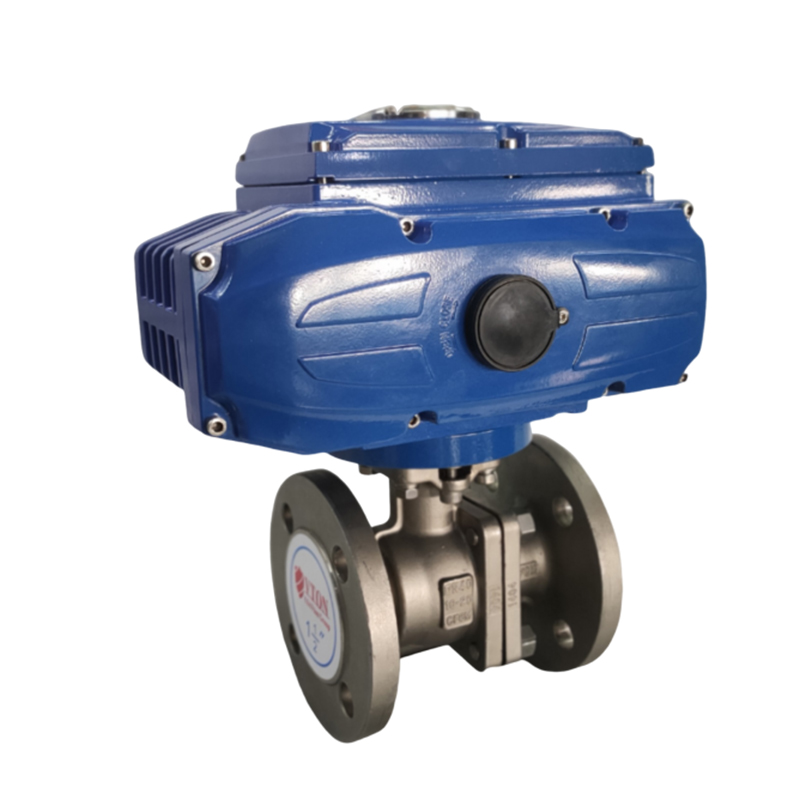
In the ever-evolving industrial sector, the demand for reliable and efficient valve solutions continues to grow. Among the myriad of valve types available, the reversing ball valve has emerged as a critical component in ensuring optimal flow control and operational flexibility across various industries. Known for its robust design and versatile applications, the reversing ball valve is gaining recognition for improving process efficiency and system reliability.
A reversing ball valve is a specialized valve designed to allow fluid flow in one direction and reverse the flow as needed, typically by altering the valve position. Unlike standard ball valves that provide simple on/off control, the reversing ball valve enhances system adaptability by enabling seamless directional changes without the need for multiple valve installations. This feature not only simplifies pipeline design but also reduces maintenance and operational downtime.
The mechanism of a reversing ball valve generally includes a rotating ball with a bore through it, housed in a valve body with two or more ports. By rotating the ball, typically 180 degrees, the valve can switch flow direction or shut it off completely. Some advanced models incorporate multi-port arrangements and special sealing technologies that ensure tight shutoff and prevent leakage, even under high pressure and temperature conditions. This makes reversing ball valves suitable for demanding industrial environments such as chemical processing, oil and gas, power generation, and water treatment.
One of the core advantages of using reversing ball valves is their ability to optimize system layout and reduce costs. By replacing multiple valves with a single reversing ball valve, companies can maximize available space and simplify pipeline routes. This consolidation also means fewer components to monitor and maintain, leading to lower lifetime costs. Additionally, the quick quarter-turn operation of the ball valve provides fast and reliable switching, which is crucial in emergency shutdowns or process adjustments.
Durability and performance are paramount when selecting valves for industrial use, and reversing ball valves are engineered to meet these criteria. High-quality materials such as stainless steel, carbon steel, and specialized alloys are commonly used to construct valve bodies and balls, providing excellent corrosion resistance and mechanical strength. Sealing elements made from PTFE, PEEK, or other advanced polymers ensure leak-tight performance even in aggressive media.
An industrial valve manufacturer with over 20 years of experience in the sector brings deep expertise to the design, production, and export of reversing ball valves. This manufacturer emphasizes stringent quality control throughout the manufacturing process, complying with international standards such as API, ANSI, and ISO. Their valves undergo rigorous testing for pressure, temperature, and cycle durability to guarantee operational reliability in various industrial conditions.
Furthermore, the manufacturer's commitment to research and development facilitates continuous innovation, allowing them to offer customized valve solutions that meet the unique requirements of clients worldwide. Whether it is modifying port sizes, adapting materials for specific fluids, or integrating automation capabilities for remote operation, their reversing ball valves demonstrate versatility and innovation.
Global export experience ensures that these valves reach customers in diverse markets, including energy, petrochemical, pharmaceuticals, and food processing industries. Technical support and after-sales service are integral parts of their customer care philosophy, ensuring that clients receive not only superior products but also expert guidance for installation, maintenance, and troubleshooting.
In summary, the reversing ball valve stands out as a versatile and cost-effective valve solution for modern industrial applications. Its ability to facilitate bidirectional flow control, combined with robust construction and ease of operation, meets the needs of complex process systems that demand reliability and efficiency. Supported by a manufacturer with two decades of industrial valve expertise, companies can confidently integrate reversing ball valves into their operations, achieving improved performance and long-term value.
As industrial challenges grow increasingly complex, innovative valve technologies such as reversing ball valves will continue to play a crucial role in streamlining processes and enhancing system resilience. Industries seeking dependable flow control solutions would benefit greatly by considering these advanced valves as part of their critical infrastructure.